
Mannaz — human, mankind
sound m · Proto-Germanic *mannaz · rune 20 of 24
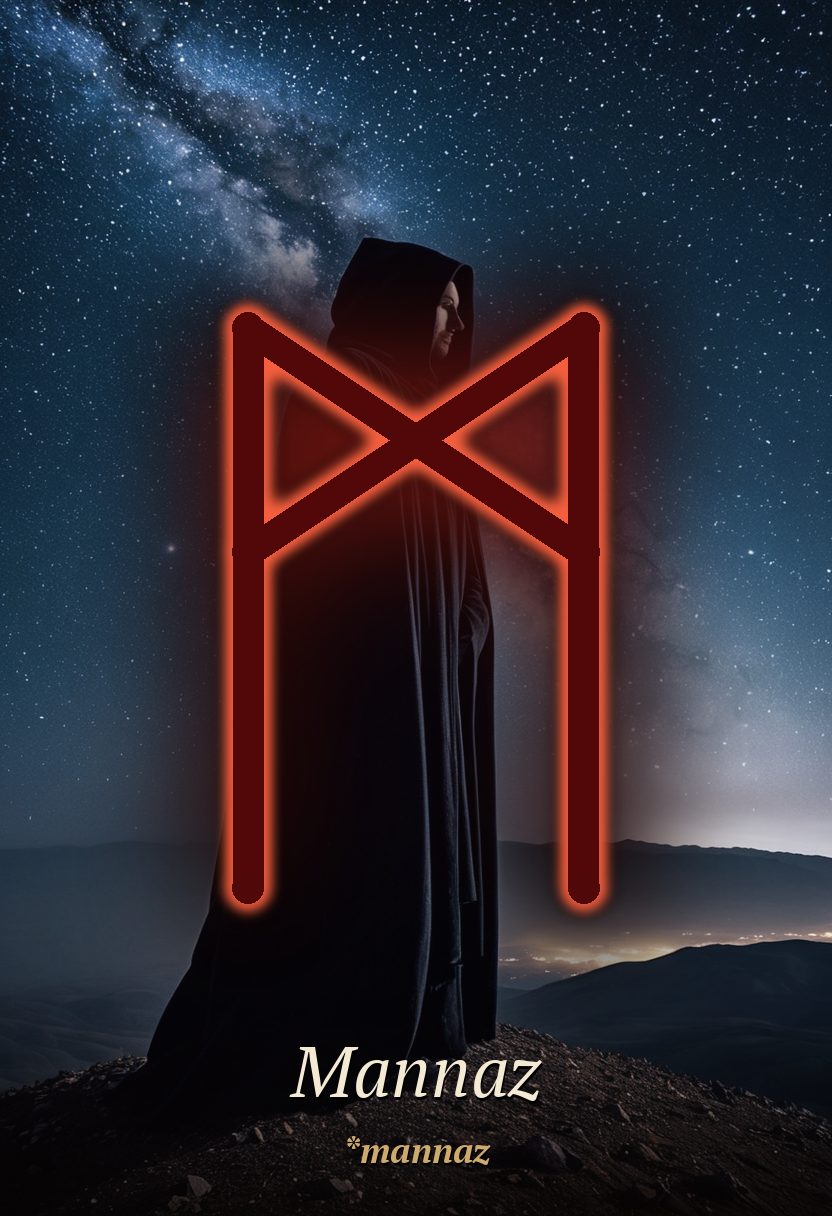
The mystery, as revival authors claim, of the divine (archetypal) structure in each human being and in humanity as a whole — a structure said to be bestowed by Heimdall as the progenitor of humans ("Rígsþula"). The M-rune is read as a symbol of Heimdall as the genetic link between gods and humans: it is taken to define the human as a descendant of the gods and to describe the runic structure within the soul. It is held to be the power of the human mind, of rationality, memory, and tradition.
Core meaningmodern reconstruction, 20th c.
The mystery, as revival authors claim, of the divine (archetypal) structure in each human being and in humanity as a whole — a structure said to be bestowed by Heimdall as the progenitor of humans ("Rígsþula"). The M-rune is read as a symbol of Heimdall as the genetic link between gods and humans: it is taken to define the human as a descendant of the gods and to describe the runic structure within the soul. It is held to be the power of the human mind, of rationality, memory, and tradition. Mannaz is framed as the rune of the "perfected human," the initiate; the archetype of the androgyne, carrying the mystery of androgyny in the psyche. It is also said to stand behind the establishing of blood-brotherhood.
Mannaz in divinationmodern reconstruction, 20th c.
Paxson: MANNAZ — the positive or negative sides of the human; it raises questions of identity and purpose — what it means to be human, how to realize one's potential, what one's role in society is. In a spiritual question — to turn to the collective unconscious and ancestral memory for creative solutions.
Draw this rune in a spread → free reading for your questionMannaz reversed (merkstave)modern reconstruction, 20th c.
Paxson (via Aswynn): reversed it may mean an enemy/adversary. The rune's danger (Gundarsson) — pride and the thought that one is separate from humanity; in Peterson — human weakness, unreliability, mistrust.
Mannaz in rune magicmodern reconstruction, 20th c.
- realizing the divine structure within humanity
- growth of intellect, memory, and mental powers
- balancing the "poles of the personality"
- unlocking the hugauga — the "inner eye"
- galdr: "mannaz-mannaz-mannaz… mmmaaannn…"
- Paxson (practice): in "A Ritual of Union" three figures (Lódurr, Hœnir, Odin) circle the ring; Lódurr holds a mirror before each one with the words "Thus I show you to yourself" — a rite of recognizing oneself as human.
The historical layerhistorical fact
The reconstructed Proto-Germanic name *mannaz means “human, mankind” — that much comes from the rune poems and comparative linguistics. The esoteric readings above are a 20th–21st-century reconstruction, not an attested ancient practice — see the Elder Futhark reference for what is actually historical.
Sources
Esoteric core and magical workings — Thorsson, "Futhark" (1984); divination/shadow/practice — Diana Paxson, "Taking Up the Runes" (2005). Both are 20th–21st-c. revival, not antiquity and not proof.
Questions about Mannaz
What does the Mannaz rune mean?
Mannaz (*mannaz) — human, mankind. The mystery, as revival authors claim, of the divine (archetypal) structure in each human being and in humanity as a whole — a structure said to be bestowed by Heimdall as the progenitor of humans ("Rígsþula"). The M-rune is read as a symbol of Heimdall as the genetic link between gods and humans: it is taken to define the human as a descendant of the gods and to describe the runic structure within the soul.
What does Mannaz reversed mean?
Paxson (via Aswynn): reversed it may mean an enemy/adversary. The rune's danger (Gundarsson) — pride and the thought that one is separate from humanity; in Peterson — human weakness, unreliability, mistrust.
How do you pronounce Mannaz?
The sound is “m”; the reconstructed Proto-Germanic name is *mannaz.