
Ehwaz — horse, steed
sound e · Proto-Germanic *ehwaz · rune 19 of 24
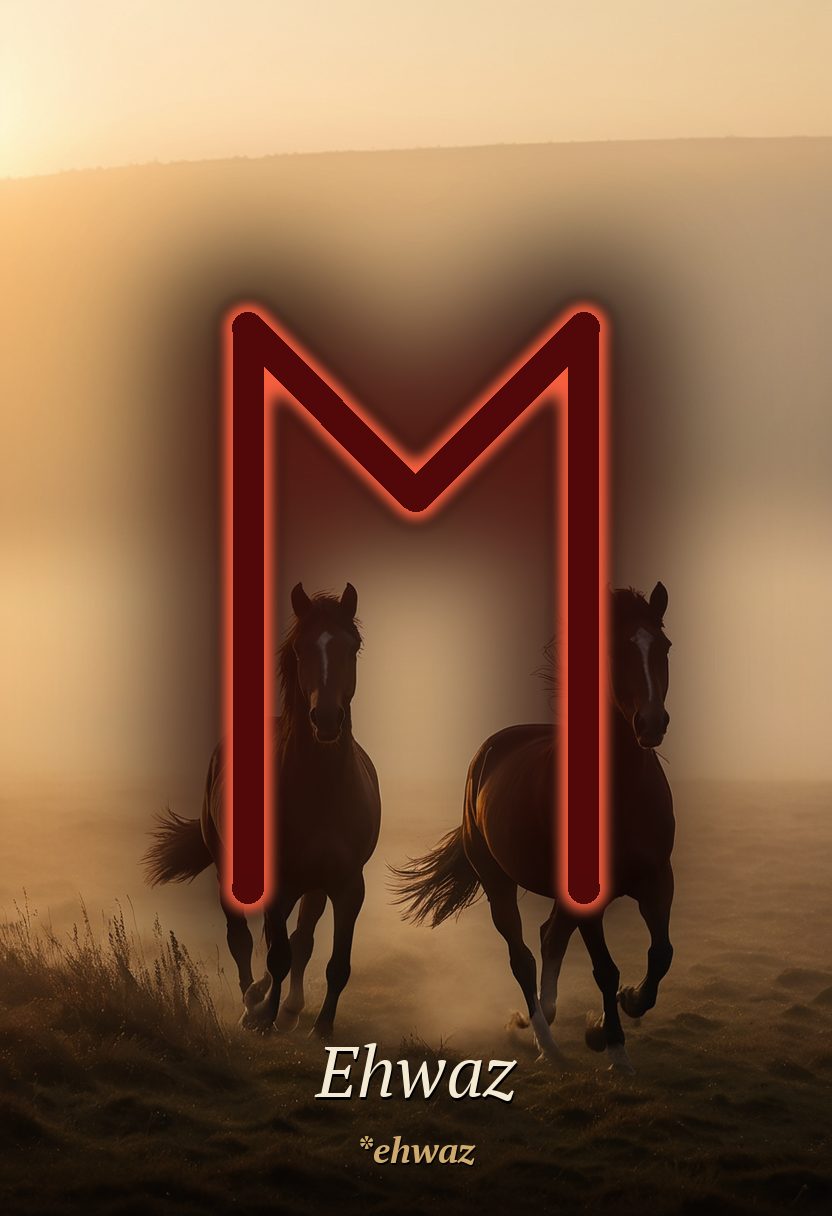
The power of the divine twins — two principles mythically manifested as horses (Hengist and Horsa; the Vedic Ashvins — "the two horses"), as authors of the revival read it. This is held to be a rune of harmonious duality: two kindred but differently directed forces working in concert toward one goal (human/horse, body/soul, person/fylgja). Ehwaz is framed as the "chariot" of the journey between the worlds of Yggdrasil: the vitki is said to ride literally on its power across realities — the rune of Sleipnir, Odin's eight-legged steed.
Core meaningmodern reconstruction, 20th c.
The power of the divine twins — two principles mythically manifested as horses (Hengist and Horsa; the Vedic Ashvins — "the two horses"), as authors of the revival read it. This is held to be a rune of harmonious duality: two kindred but differently directed forces working in concert toward one goal (human/horse, body/soul, person/fylgja). Ehwaz is framed as the "chariot" of the journey between the worlds of Yggdrasil: the vitki is said to ride literally on its power across realities — the rune of Sleipnir, Odin's eight-legged steed. It is claimed to carry trust and loyalty — the spiritual bond a rider forms with a horse. It is also taken as a symbol of the ideal union of man and woman, the mystery of lawful marriage.
Ehwaz in divinationmodern reconstruction, 20th c.
Paxson: EHWAZ — change and movement: a journey or development (spiritual or physical), a growth of possibilities through cooperation with another; sometimes a need to change the situation by changing one's own attitude. Associated with union, loyalty, teamwork "in harness" — a dynamic harmony with another.
Draw this rune in a spread → free reading for your questionEhwaz reversed (merkstave)modern reconstruction, 20th c.
Paxson gives no formal reversal, but cites Aswynn: negatively — loss or rupture of a relationship.
Ehwaz in rune magicmodern reconstruction, 20th c.
- easing the "journey of the soul" through the worlds and projecting the "soul" within Midgard
- awareness of the unity of the psychosomatic whole
- strengthening trust and loyalty
- a source of prophetic wisdom
- projection of magical power and swiftness in all things
- galdr: "ehwaz-ehwaz-ehwaz… eeee-hwoooo…"
- Paxson (practice): in "A Ritual of Union" pair off and go through a meditative journey to Heimdall together — one supplies a detail of the vision, the other develops it, amplifying each other's intuition.
The historical layerhistorical fact
The reconstructed Proto-Germanic name *ehwaz means “horse, steed” — that much comes from the rune poems and comparative linguistics. The esoteric readings above are a 20th–21st-century reconstruction, not an attested ancient practice — see the Elder Futhark reference for what is actually historical.
Sources
Esoteric core and magical workings — Thorsson, "Futhark" (1984); divination/shadow/practice — Diana Paxson, "Taking Up the Runes" (2005). Both are 20th–21st-c. revival, not antiquity and not proof.
Questions about Ehwaz
What does the Ehwaz rune mean?
Ehwaz (*ehwaz) — horse, steed. The power of the divine twins — two principles mythically manifested as horses (Hengist and Horsa; the Vedic Ashvins — "the two horses"), as authors of the revival read it. This is held to be a rune of harmonious duality: two kindred but differently directed forces working in concert toward one goal (human/horse, body/soul, person/fylgja).
What does Ehwaz reversed mean?
Paxson gives no formal reversal, but cites Aswynn: negatively — loss or rupture of a relationship.
How do you pronounce Ehwaz?
The sound is “e”; the reconstructed Proto-Germanic name is *ehwaz.