
Kenaz — torch / pine-splint (or “sore/ulcer” — disputed)
sound k · Proto-Germanic *kenaz · rune 6 of 24 · also spelled Kaunan
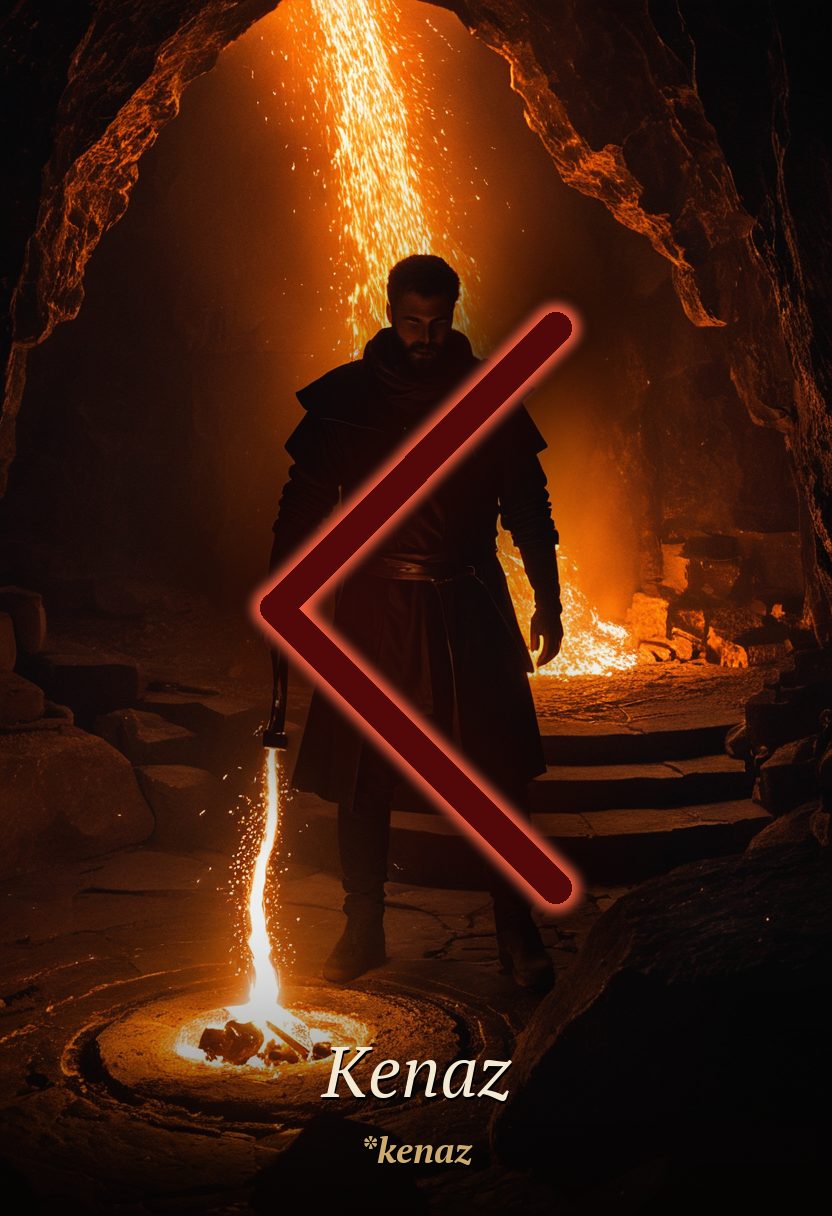
The rune of fire under human control — the flame of the torch and the smith's forge, directed by the will toward an intended result (in contrast to the raw elemental fire of Fehu). It is the mystery of rebirth through death and sacrifice: fire always transforms and regenerates. Kenaz is the ability and the will to create, the rune of the artist and craftsman, of the technical side of magic: the controlled energy of the psyche joins with the controlled energy of nature and gives birth to a crafted thing.
Core meaningmodern reconstruction, 20th c.
The rune of fire under human control — the flame of the torch and the smith's forge, directed by the will toward an intended result (in contrast to the raw elemental fire of Fehu). It is the mystery of rebirth through death and sacrifice: fire always transforms and regenerates. Kenaz is the ability and the will to create, the rune of the artist and craftsman, of the technical side of magic: the controlled energy of the psyche joins with the controlled energy of nature and gives birth to a crafted thing. It is the “human rune,” the vessel of knowledge together with skill. Here too belongs the mystery of the birth of a third out of the joining of two, and the rune of passion and sexual love as the root of all creation.
Kenaz in divinationmodern reconstruction, 20th c.
Paxson: the controlled fire of the torch/forge — illumination, knowledge (ken — “to know”), creativity and mastery, the transforming and purifying fire. With runes of fertility/craft — creative work; in mysticism — enlightenment; with runes of force — purification or uncontrolled passion.
Draw this rune in a spread → free reading for your questionKenaz reversed (merkstave)modern reconstruction, 20th c.
Paxson gives no formal reversal; in a negative context (Gundarsson) — disintegration without reassembly; per Peterson — a misfortune that will worsen if left unattended. Fire out of control destroys rather than enlivens.
Kenaz in rune magicmodern reconstruction, 20th c.
- strengthening abilities in all spheres
- creative inspiration
- increasing polarity as a tool of working
- operations of regeneration and healing
- love (especially sexual)
- galdr: “kenaz-kenaz-kenaz… ku-ka-ki-ke-ko… kun-kan-kin-ken-kon… kaunnnn…”
- Paxson (practice): in the ritual “The Fire Faring,” gaze into the flame of your torch or candle, calling up the image of what needs to be illuminated (knowledge) or burned away (an inner hindrance), and let the fire transform it.
The historical layerhistorical fact
The reconstructed Proto-Germanic name *kenaz means “torch / pine-splint (or “sore/ulcer” — disputed)” — that much comes from the rune poems and comparative linguistics. The esoteric readings above are a 20th–21st-century reconstruction, not an attested ancient practice — see the Elder Futhark reference for what is actually historical.
Sources
Esoteric core and magical workings — Thorsson, Futhark (1984); divination/shadow/practice — Diana Paxson, Taking Up the Runes (2005). Both are 20th–21st-century revival, not antiquity and not proof.
Questions about Kenaz
What does the Kenaz rune mean?
Kenaz (*kenaz) — torch / pine-splint (or “sore/ulcer” — disputed). The rune of fire under human control — the flame of the torch and the smith's forge, directed by the will toward an intended result (in contrast to the raw elemental fire of Fehu). It is the mystery of rebirth through death and sacrifice: fire always transforms and regenerates.
What does Kenaz reversed mean?
Paxson gives no formal reversal; in a negative context (Gundarsson) — disintegration without reassembly; per Peterson — a misfortune that will worsen if left unattended. Fire out of control destroys rather than enlivens.
How do you pronounce Kenaz?
The sound is “k”; the reconstructed Proto-Germanic name is *kenaz.