
Gebo — gift, present
sound g · Proto-Germanic *gebō · rune 7 of 24
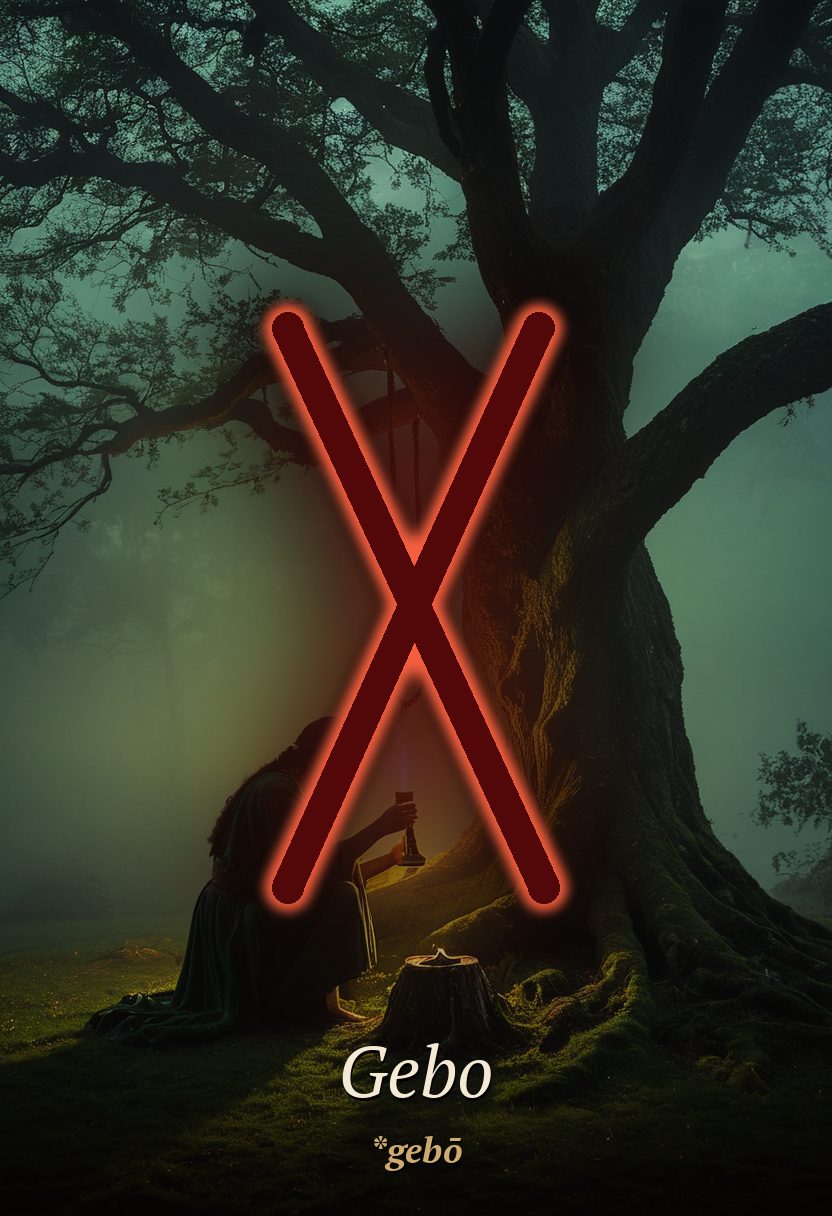
The rune of "god" — of that hidden, unconscious magical force that was present in Ginnungagap (the charged void) even before the worlds were made; the sacred mystery of two (or many) in one. It is the giver, the giving, the gift, and the one given to: "the subject, verb, and objects of the multiverse," and also part of the mystery of sacrifice as a gift of power by which gods and humans sustain the ecology of cosmic might. By the power of Gebo, people are bound by will toward a common result — this is the root force of runic orders and warband systems.
Core meaningmodern reconstruction, 20th c.
The rune of "god" — of that hidden, unconscious magical force that was present in Ginnungagap (the charged void) even before the worlds were made; the sacred mystery of two (or many) in one. It is the giver, the giving, the gift, and the one given to: "the subject, verb, and objects of the multiverse," and also part of the mystery of sacrifice as a gift of power by which gods and humans sustain the ecology of cosmic might. By the power of Gebo, people are bound by will toward a common result — this is the root force of runic orders and warband systems. Within it lie the secrets of joining two into a single creative force greater than their sum: the rune of sexual magic practiced for the attainment of wisdom.
Gebo in divinationmodern reconstruction, 20th c.
Paxson: gift and exchange — generosity, reciprocity, union/partnership, receiving gifts or love, a wedding/mystical marriage, unity of intent; also contracts and agreements. A universal rune of luck (with Fehu — for prosperity, with Ingwaz — for fertility).
Draw this rune in a spread → free reading for your questionGebo reversed (merkstave)modern reconstruction, 20th c.
The rune is symmetrical — Paxson gives no reversal. The shadow: prodigality or stinginess, problems with flow; a gift can bind the recipient into dependency, and unwillingness on the giver's or taker's part spoils the exchange.
Gebo in rune magicmodern reconstruction, 20th c.
- sexual magic
- sexual-magical initiation
- mystical union
- growth of magical powers
- harmony among brothers, sisters, and lovers
- galdr: "ge-bo-ge-bo-ge-bo… gu-ga-gi-ge-go… gaaa-fffff…"
- Paxson (practice): in the ritual "The Gift of Joy" — a sumbel: the horn passes around the circle, each gives thanks for gifts received and, if inspired, pledges an offering; the remainder is poured into the sacrificial bowl.
The historical layerhistorical fact
The reconstructed Proto-Germanic name *gebō means “gift, present” — that much comes from the rune poems and comparative linguistics. The esoteric readings above are a 20th–21st-century reconstruction, not an attested ancient practice — see the Elder Futhark reference for what is actually historical.
Sources
Esoteric core and magical workings — Thorsson, "Futhark" (1984); divination/shadow/practice — Diana Paxson, "Taking Up the Runes" (2005). Both are 20th–21st-c. revival, not antiquity and not proof.
Questions about Gebo
What does the Gebo rune mean?
Gebo (*gebō) — gift, present. The rune of "god" — of that hidden, unconscious magical force that was present in Ginnungagap (the charged void) even before the worlds were made; the sacred mystery of two (or many) in one. It is the giver, the giving, the gift, and the one given to: "the subject, verb, and objects of the multiverse," and also part of the mystery of sacrifice as a gift of power by which gods and humans sustain the ecology of cosmic might.
What does Gebo reversed mean?
The rune is symmetrical — Paxson gives no reversal. The shadow: prodigality or stinginess, problems with flow; a gift can bind the recipient into dependency, and unwillingness on the giver's or taker's part spoils the exchange.
How do you pronounce Gebo?
The sound is “g”; the reconstructed Proto-Germanic name is *gebō.