
Wunjo — joy, bliss
sound w · Proto-Germanic *wunjō · rune 8 of 24 · also spelled Wynn
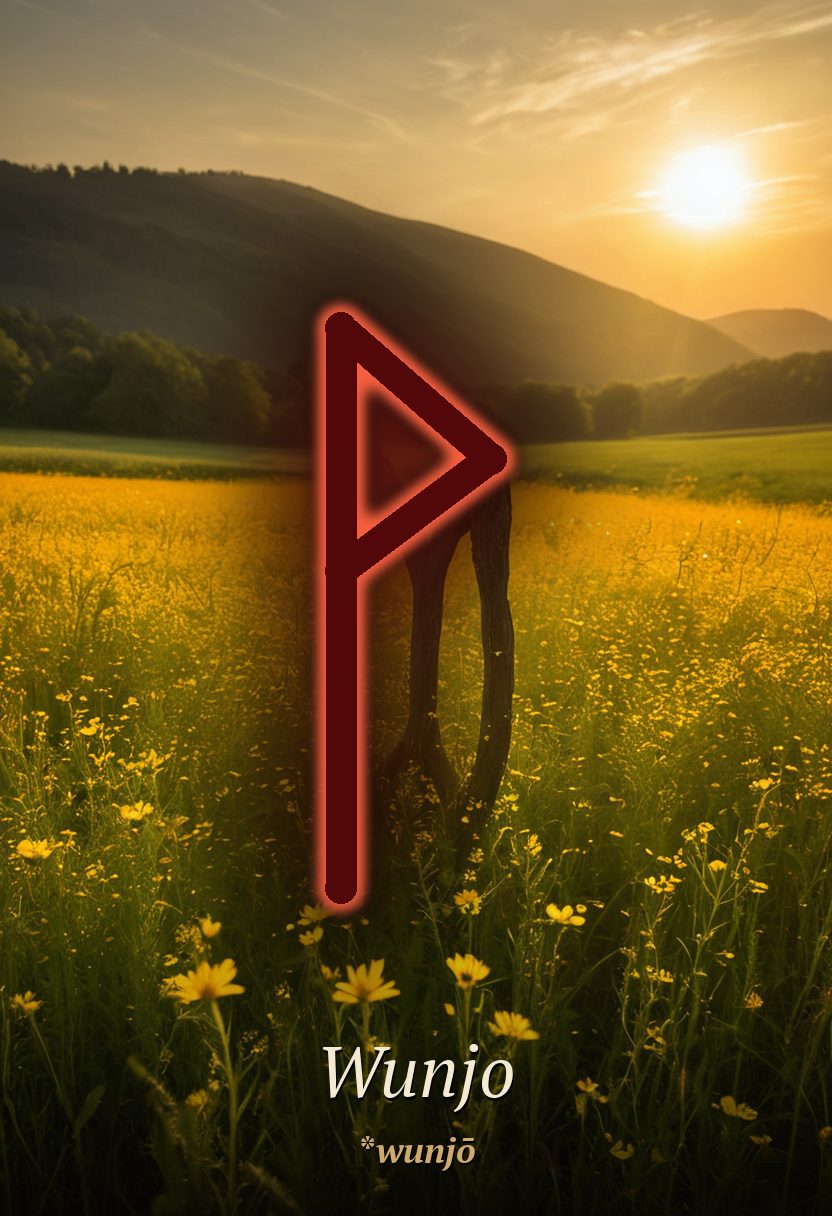
The root force of attraction that kindred beings (wights) from a common source feel for one another and that binds them into an organic whole — in humans this is embodied in clan and tribe. Ancient Germanic society was "clan-centric": a strong kin was the best defense both against outside invaders and against tyranny from within, and the honor of the kin safeguarded the freedom of the individual. Wunjo is the mystery of harmonious coexistence of different but kindred forces; when all members of the kin labor together in accord, fitted into their environment, true holiness is born.
Core meaningmodern reconstruction, 20th c.
The root force of attraction that kindred beings (wights) from a common source feel for one another and that binds them into an organic whole — in humans this is embodied in clan and tribe. Ancient Germanic society was "clan-centric": a strong kin was the best defense both against outside invaders and against tyranny from within, and the honor of the kin safeguarded the freedom of the individual. Wunjo is the mystery of harmonious coexistence of different but kindred forces; when all members of the kin labor together in accord, fitted into their environment, true holiness is born. It is the energy that binds different fields of force into one, and so the vitki uses it to bind several runes into a single harmonious force toward a goal.
Wunjo in divinationmodern reconstruction, 20th c.
Paxson: joy, happiness, bliss — lends the surrounding runes a positive meaning; success in love and in working together, integration of the personality, good news, harmony, friendship. Drawn on the forehead, it lifts gloom.
Draw this rune in a spread → free reading for your questionWunjo reversed (merkstave)modern reconstruction, 20th c.
Paxson states plainly: "in a negative position its dangers are stagnation, discord, and alienation." (Per Gundarsson, an excess of good fellowship threatens complacency and blindness to problems.)
Wunjo in rune magicmodern reconstruction, 20th c.
- strengthens bonds and ties
- calling forth fellowship and harmony
- banishes alienation
- happiness and well-being
- awareness of the bonds and the multiplicity of relations among all things
- binding of runes for purposes (bind-runes); galdr: "wun-jo-wun-jo-wun-jo… wu-wa-wi-we-wo… wwwu-uu-nnnn…"
- Paxson (practice): Wunjo governs the making of bind-runes — aesthetic monograms with shared lines; choose runes to fit the task and gather them into a single sign with a magical purpose.
The historical layerhistorical fact
The reconstructed Proto-Germanic name *wunjō means “joy, bliss” — that much comes from the rune poems and comparative linguistics. The esoteric readings above are a 20th–21st-century reconstruction, not an attested ancient practice — see the Elder Futhark reference for what is actually historical.
Sources
Esoteric core and magical workings — Thorsson, "Futhark" (1984); divination/shadow/practice — Diana Paxson, "Taking Up the Runes" (2005). Both are 20th–21st-c. revival, not antiquity and not proof.
Questions about Wunjo
What does the Wunjo rune mean?
Wunjo (*wunjō) — joy, bliss. The root force of attraction that kindred beings (wights) from a common source feel for one another and that binds them into an organic whole — in humans this is embodied in clan and tribe. Ancient Germanic society was "clan-centric": a strong kin was the best defense both against outside invaders and against tyranny from within, and the honor of the kin safeguarded the freedom of the individual.
What does Wunjo reversed mean?
Paxson states plainly: "in a negative position its dangers are stagnation, discord, and alienation." (Per Gundarsson, an excess of good fellowship threatens complacency and blindness to problems.)
How do you pronounce Wunjo?
The sound is “w”; the reconstructed Proto-Germanic name is *wunjō.