
Isa — ice
sound i · Proto-Germanic *īsaz · rune 11 of 24
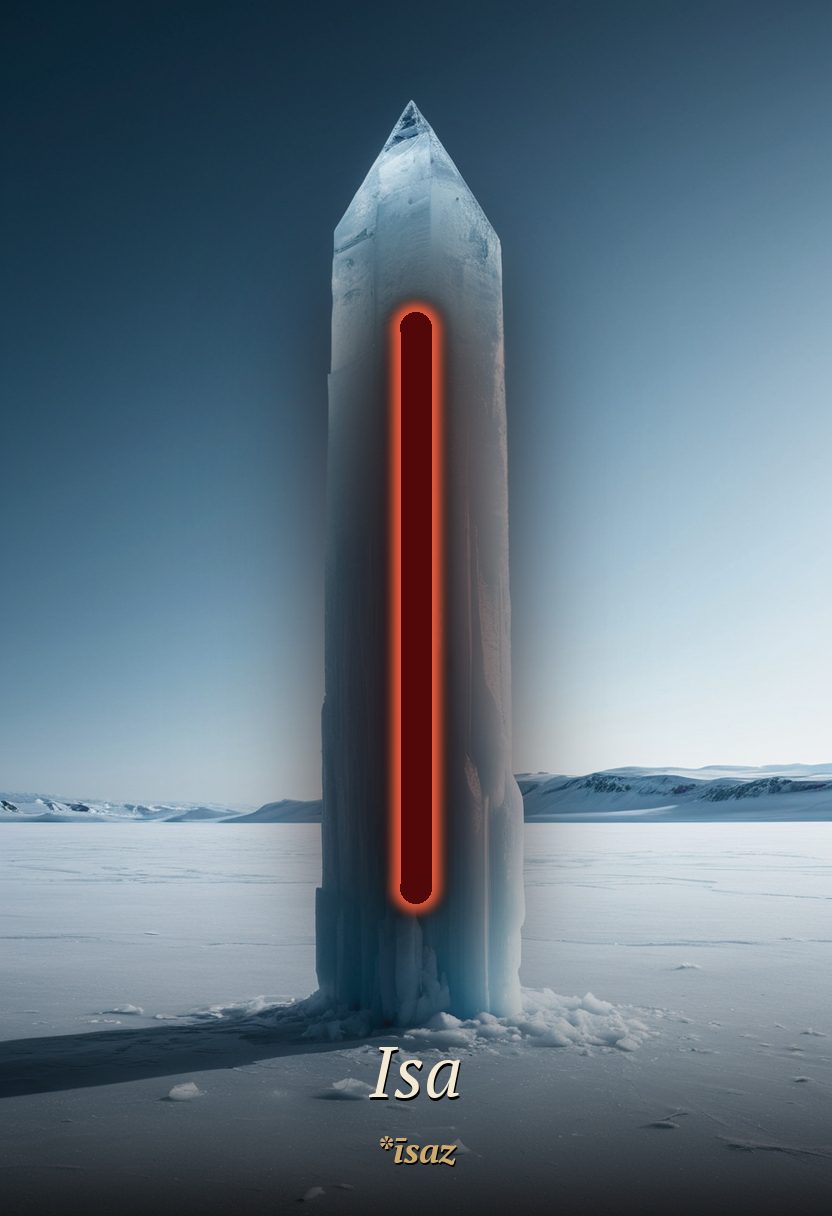
The antipole of Fehu: the world-ice flowing out of Niflheim. Isa is not matter, but rather a concept of "antimatter" which, joined with the energy of Muspellsheim, gives birth to what we call matter (Midgard); akin to the prima materia of other philosophies, symbolized by a "black hole." It is the force of attraction, of gravity, inertia, and entropy in the multiverse — immobility and the absence of vibration. At the same time, Isa is a symbol of the individual ego: the centering, concentrating force that holds the "I" together through the stressful trials of initiation and serves as a bridge between worlds.
Core meaningmodern reconstruction, 20th c.
The antipole of Fehu: the world-ice flowing out of Niflheim. Isa is not matter, but rather a concept of "antimatter" which, joined with the energy of Muspellsheim, gives birth to what we call matter (Midgard); akin to the prima materia of other philosophies, symbolized by a "black hole." It is the force of attraction, of gravity, inertia, and entropy in the multiverse — immobility and the absence of vibration. At the same time, Isa is a symbol of the individual ego: the centering, concentrating force that holds the "I" together through the stressful trials of initiation and serves as a bridge between worlds.
Isa in divinationmodern reconstruction, 20th c.
Paxson: ISA ("ice") — a matter "frozen," stalled, or losing momentum, but which may later "thaw"; less often frozen irreversibly. Coldness between people, emotional rigidity, a pause — or, on the positive side, a need for rest, concentration, and inner stillness.
Draw this rune in a spread → free reading for your questionIsa reversed (merkstave)modern reconstruction, 20th c.
The rune is symmetrical — there is no reversal; the shadow (excess): dullness, numbness, sterility, paralyzing fear, insensitivity; the icy prison of an "I" that refuses to interact with the world. The force is brittle: overstrained, it "shatters into shards" — beware the energy released.
Isa in rune magicmodern reconstruction, 20th c.
- developing concentration and will
- compression, the halting of unwanted dynamic forces
- basic integration of the ego in a balanced system
- the power of restraint over other beings (wights)
- galdr: "i-sa-i-sa-i-sa… iiiiii… iiiisssss…"
- Paxson (practice): the "Ice Rest" meditation — lie along the north-south axis, trace ISA on the forehead, even out the breath (4 in / 2 pause / 4 out), tense and relax the muscles, releasing thoughts into silence; then trace JERA, imagining warmth melting the ice.
The historical layerhistorical fact
The reconstructed Proto-Germanic name *īsaz means “ice” — that much comes from the rune poems and comparative linguistics. The esoteric readings above are a 20th–21st-century reconstruction, not an attested ancient practice — see the Elder Futhark reference for what is actually historical.
Sources
Esoteric core and magical workings — Thorsson, "Futhark" (1984); divination/shadow/practice — Diana Paxson, "Taking Up the Runes" (2005). Both are 20th–21st-c. revival, not antiquity and not proof.
Questions about Isa
What does the Isa rune mean?
Isa (*īsaz) — ice. The antipole of Fehu: the world-ice flowing out of Niflheim. Isa is not matter, but rather a concept of "antimatter" which, joined with the energy of Muspellsheim, gives birth to what we call matter (Midgard); akin to the prima materia of other philosophies, symbolized by a "black hole." It is the force of attraction, of gravity, inertia, and entropy in the multiverse — immobility and the absence of vibration.
What does Isa reversed mean?
The rune is symmetrical — there is no reversal; the shadow (excess): dullness, numbness, sterility, paralyzing fear, insensitivity; the icy prison of an "I" that refuses to interact with the world. The force is brittle: overstrained, it "shatters into shards" — beware the energy released.
How do you pronounce Isa?
The sound is “i”; the reconstructed Proto-Germanic name is *īsaz.